updated 10 September 2026
May 18–19, 2026: Fundamentals of Library Systems and Digital Archiving
April 19–23, 2026: Photogrammetry and Laser Scanning for Digital Documentation of Cultural Heritage
April 1, 2026: ACOR Senior Staff Visit the DGAM in Damascus
March 24–25, 2026: Training in National Inventory Software/Axiell
February 19–21, 2026: Visit by the Director General and Deputy Director of the DGAM to ACOR
September 11, 2023: “Reviving Polymathy in Contemporary Education” by Salwa Al-Noori
16 July 19, 2019: “The Ancient City of Bosra and the Nabataean Sanctuary at Sia (Syria)” by Pauline Piraud-Fournet
February 28, 2018: “ACOR @ 50: Past, Present, and Future” by Barbara A. Porter
May 16, 2017: “Sea People and the Neo-Hittites in the ‘Land of Palistin'” by Timothy P. Harrison
September 28, 2016: “The Levantine Early Bronze Age: Re-evaluation and New Vistas” by Suzanne Richard
2015: “Tracing the Roots of Conflict: Geographic Perspectives on Sectarian Violence in Syria” by Ali Hamdan
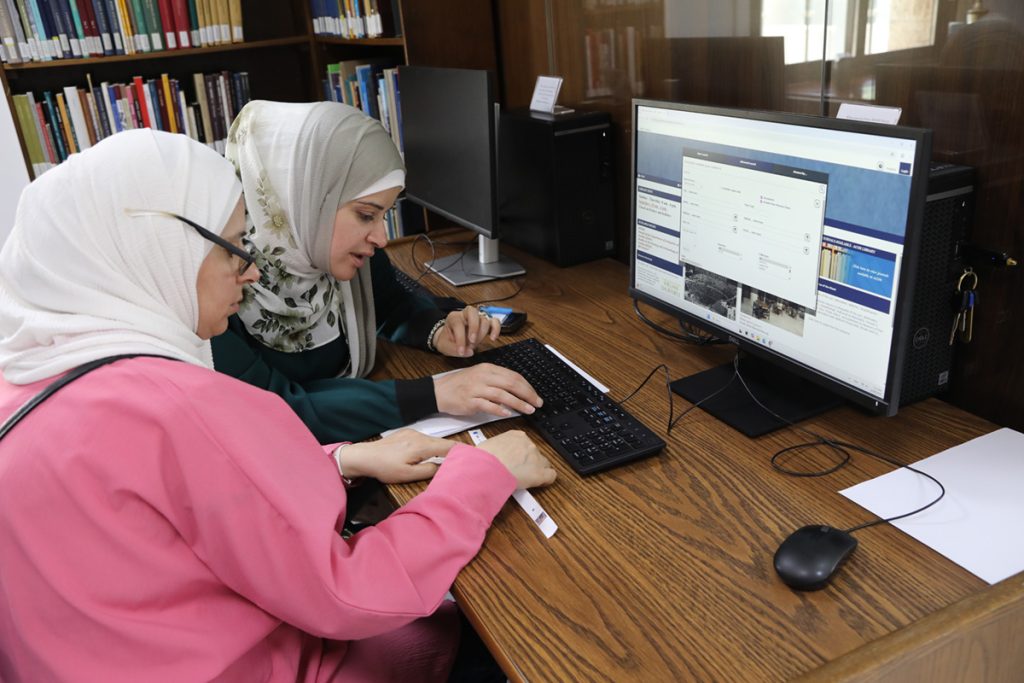
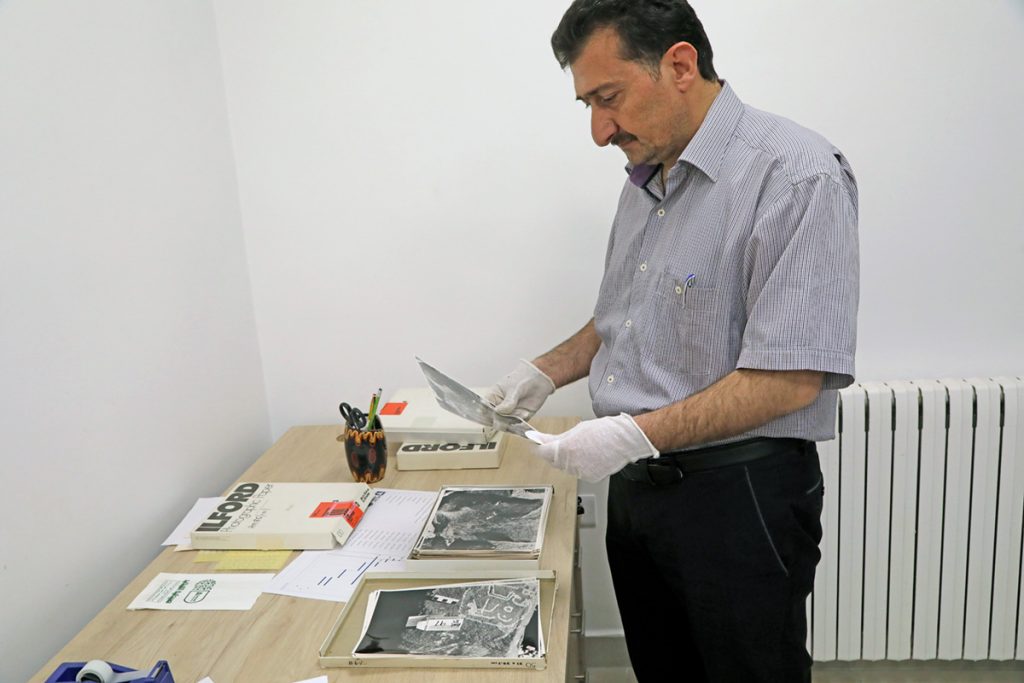
Fundamentals of Library Systems and Digital Archiving
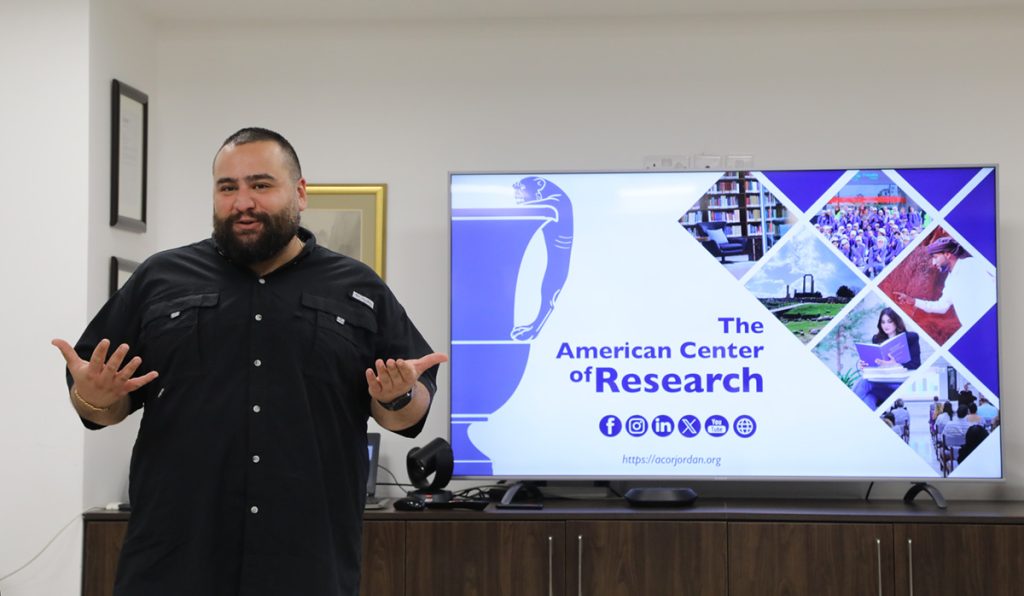
As part of ACOR activities, ACOR organized Fundamentals of Library Systems & Digital Archiving workshop on May 18 – 19, 2026, at the ACOR center site in Amman. This two-day workshop was held in cooperation with the Department of Antiquities (DOA) and the Directorate-General of Antiquities and Museums – Syria (DGAM), under ACOR supervision. The main goal of the workshop was to bring together legal professionals to discuss the fundamentals of library systems and digital archiving.
The first day was devoted to understanding the purpose and core functions of general library systems, how to read, interpret, and navigate the Library of Congress Classification system, and differentiating between physical library management and digital archiving principles.
On the second day, participants learned about the fundamental workflow, hardware requirements, and metadata standards for digitizing photographs, including basic storage strategies.
The workshop received very positive feedback from the six participants, who included two museum curators, a librarian, and an archaeologist from the DGAM and a museum curator and an archaeologist from the DoA.
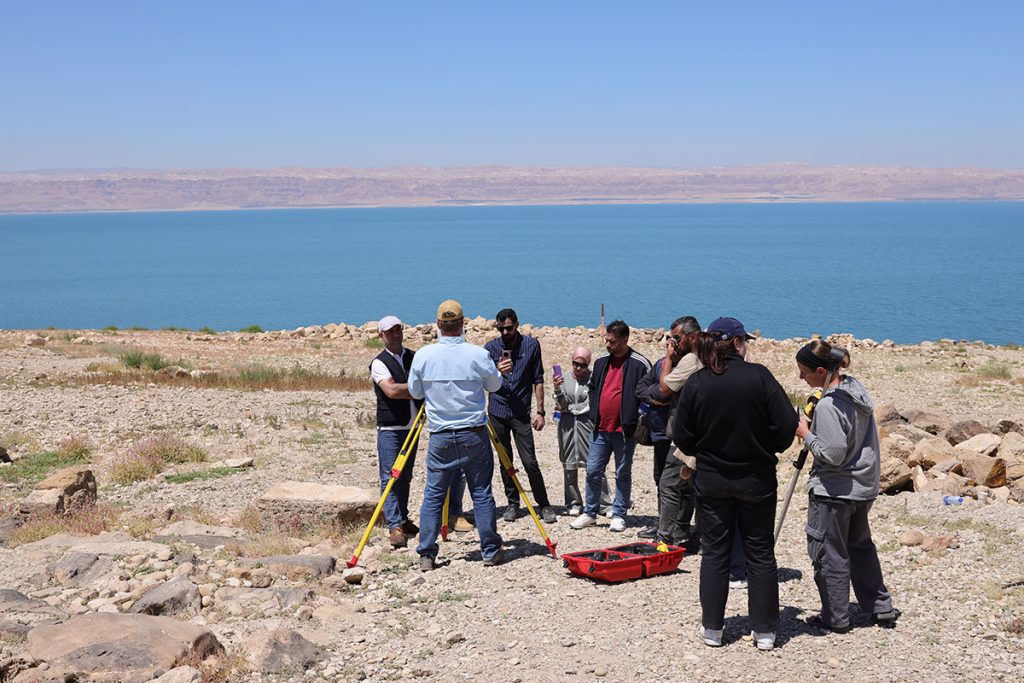
Photogrammetry and Laser Scanning for Digital Documentation of Cultural Heritage
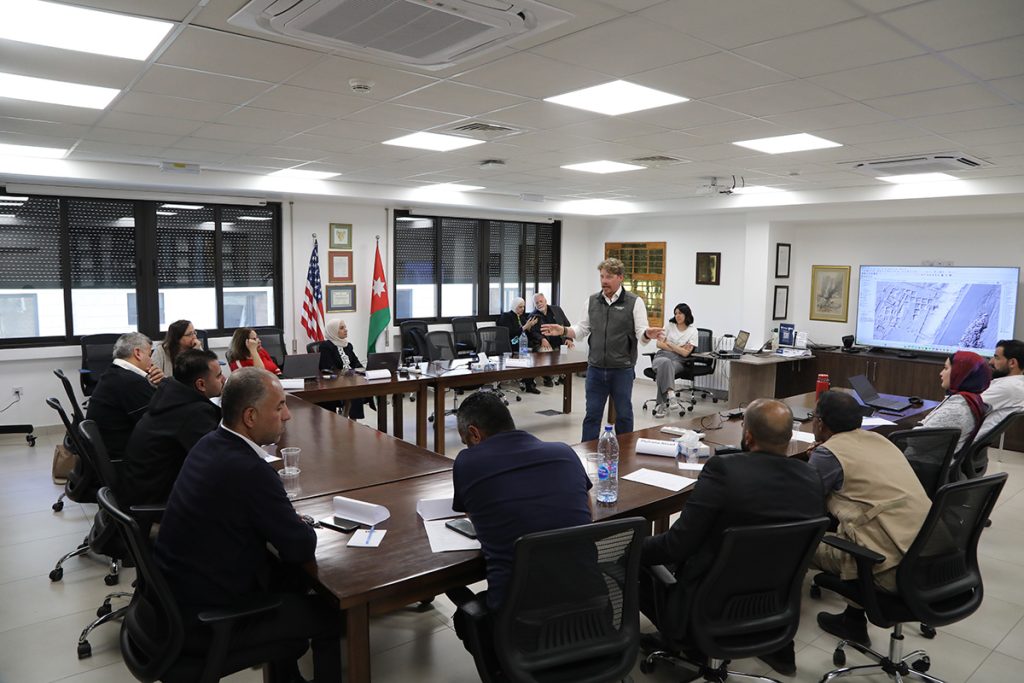
ACOR provided training to six employees from the Directorate General of Antiquities and Museums and four employees from the Jordanian Department of Antiquities. The workshop, held 19–23 April 2026, introduced participants to practical 3D documentation methods for cultural heritage, with a primary focus on photogrammetry and an additional demonstration of laser scanning. Participants learned core field capture strategies, as well as essential processing techniques for transforming collected data into accurate and useful 3D outputs. The workshop was designed to provide both a conceptual foundation and hands-on guidance for heritage documentation workflows.
ACOR Senior Staff Visit the DGAM in Damascus
Nisreen Abu AlShaikh, Chief Financial Officer and Deputy Director, and Lina Shara’an, Human Resources Manager, conducted an official visit to the Syrian Arab Republic, where they met with the Director General of the Directorate General of Antiquities and Museums (DGAM), Dr. Masaoud Badawi, and the Deputy Director, Dr. Lina Kutiefan.
During the visit, they were also received by the Deputy Minister of Culture at the Ministry’s premises for a full day of discussions and planning. The meetings focused on strengthening institutional collaboration, exploring areas of mutual interest in cultural heritage preservation, and identifying opportunities for future joint initiatives, including capacity-building programs and technical cooperation.
This visit contributed to reinforcing professional ties and advancing coordinated efforts to support the protection and management of cultural heritage in Syria.
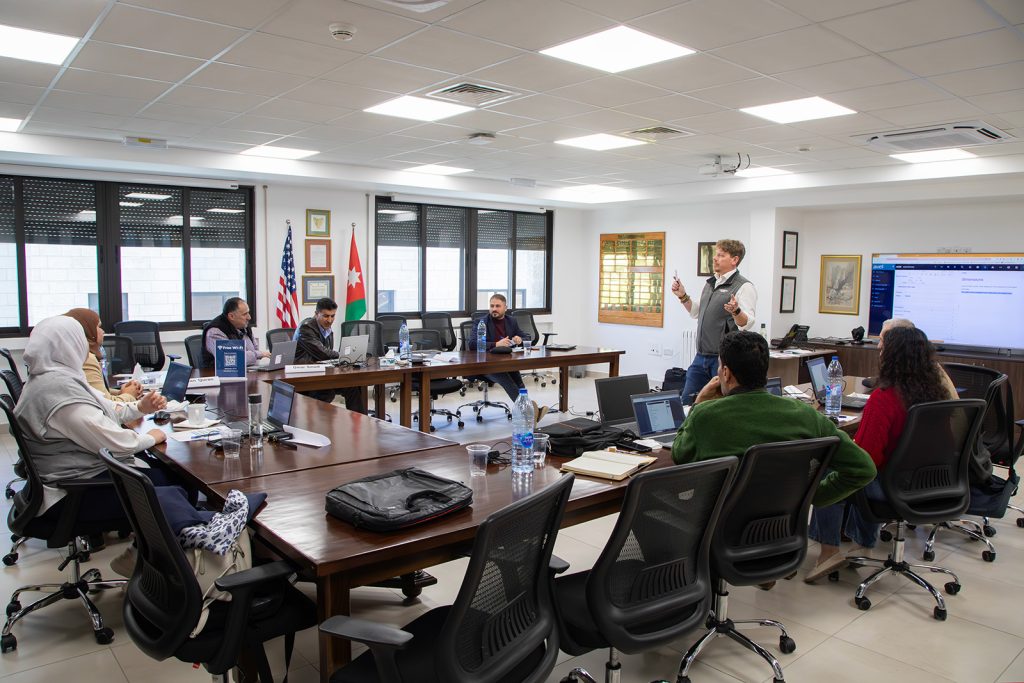
Axiell Collections Training for Museum Collections, Storage, and Artifact Management (March 2026)
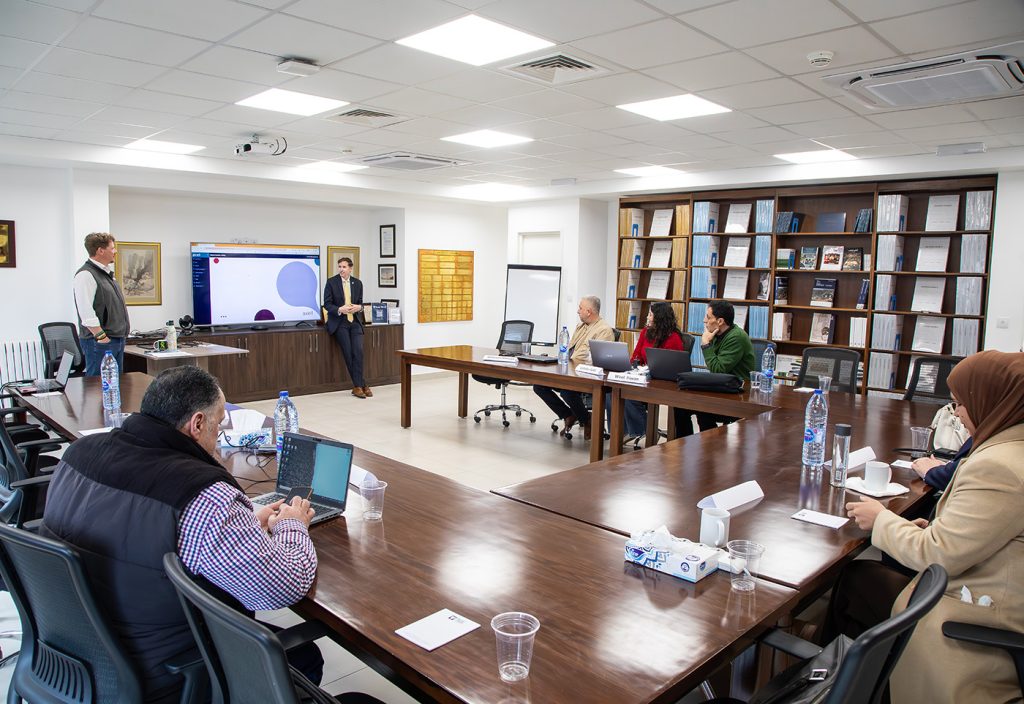
ACOR provided training to three employees from the Syrian Directorate General of Antiquities and Museums and four from Jordan’s Department of Antiquities who specialize in museums and object cataloging. The training equipped museum and heritage professionals with practical instruction in using Axiell Collections for the documentation and management of museum collections and archaeological artifacts.
Participants learned how to create and maintain object records, apply standardized metadata, document provenance and condition, and manage object locations and collection movements within the system.
The training emphasized best practices in collections documentation, data quality, and consistent cataloging standards to support professional museum management. It also highlighted the role of accurate, well-structured collection records in strengthening cultural heritage protection, particularly by improving traceability and documentation that can help prevent the illicit trafficking of antiquities.
Visit by the Director General and Deputy Director of the DGAM to ACOR
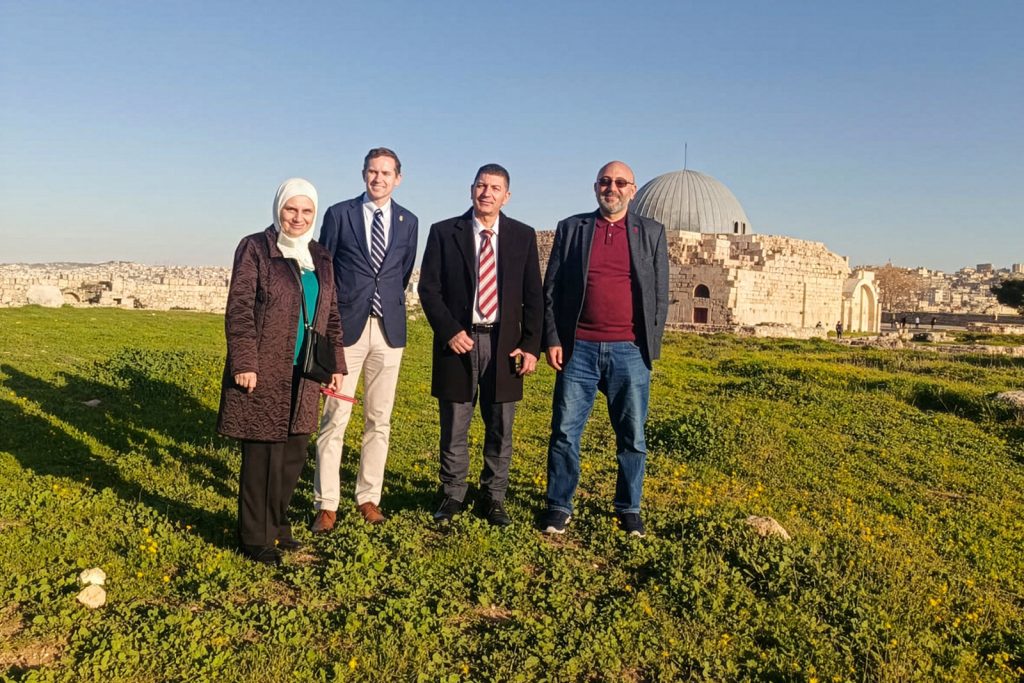
To strengthen relationships with the Syrian DGAM, ACOR was honored in February to host the new Director General, Dr. Masaoud Badawi, and the Deputy Director, Dr. Lina Kutiefan, for three days of discussions and planning at our center. During their visit on February 19–21, the Director General of Jordan’s Department of Antiquities, H.E. Prof. Fawzi Abudannah, also met with and received the DGAM delegation in Amman.
“Introduction to Geographic Information Systems for Archaeology and Cultural Heritage”
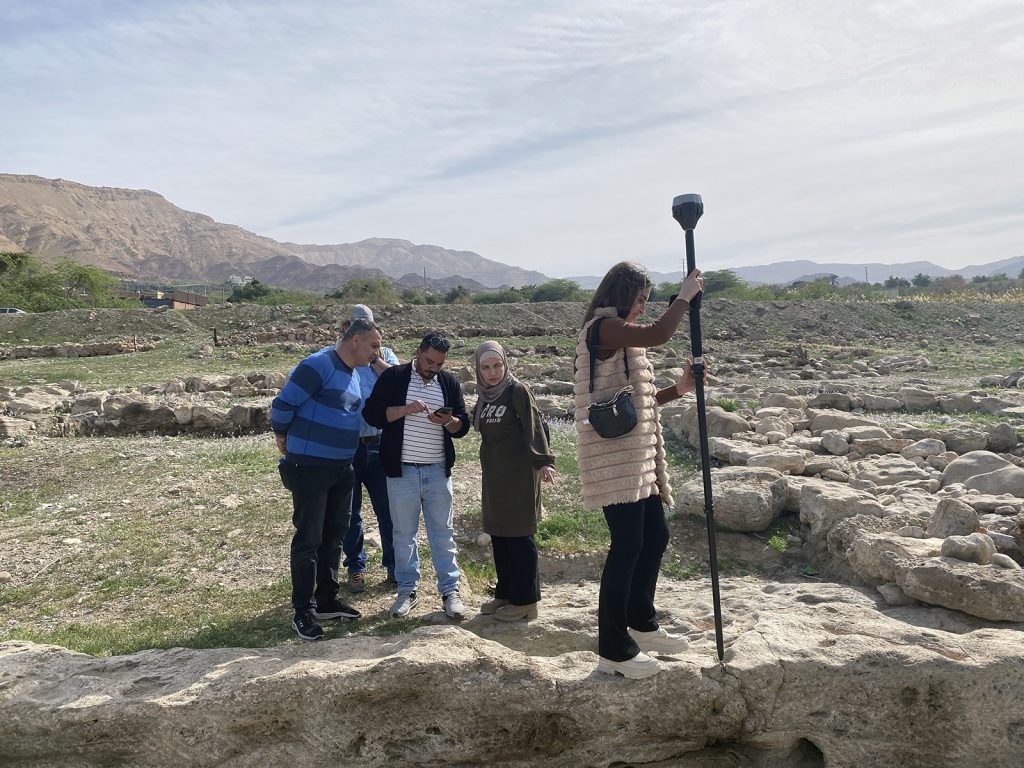
The American Center of Research held a five-day workshop titled “Introduction to Geographic Information Systems for Archaeology and Cultural Heritage” from February 8 to 12, 2026 as a collaborative project between the ACOR and Global Digital Heritage (GDH). The workshop brought together nine participants—four heritage professionals from Syria’s Directorate-General of Antiquities and Museums (DGAM) and five from Jordan’s Department of Antiquities (DoA)—for an intensive introduction to geographic information systems (GIS) and spatial thinking in archaeological and cultural heritage contexts.
Co-led by Helen O’Brien, coordinator of the Archaeology Center Program at Pima Community College in Tucson, Arizona, and Matthew Vincent, project director at ACOR and scientific director with Global Digital Heritage, the workshop provided hands-on training in fundamental GIS concepts, spatial data collection and management, and the application of geospatial technologies to heritage documentation and site analysis. Participants worked through practical exercises using both desktop GIS software and field-based mobile applications, learning to create, analyze, and visualize spatial data relevant to their ongoing heritage projects.
The workshop emphasized critical thinking about how spatial relationships and geographic context inform archaeological interpretation and heritage management decisions. Through collaborative exercises and case studies drawn from regional archaeological sites, participants developed skills in digital mapping, spatial analysis, and data-driven approaches to understanding cultural landscapes.
anc
Dr. Anas Haj Zeidan
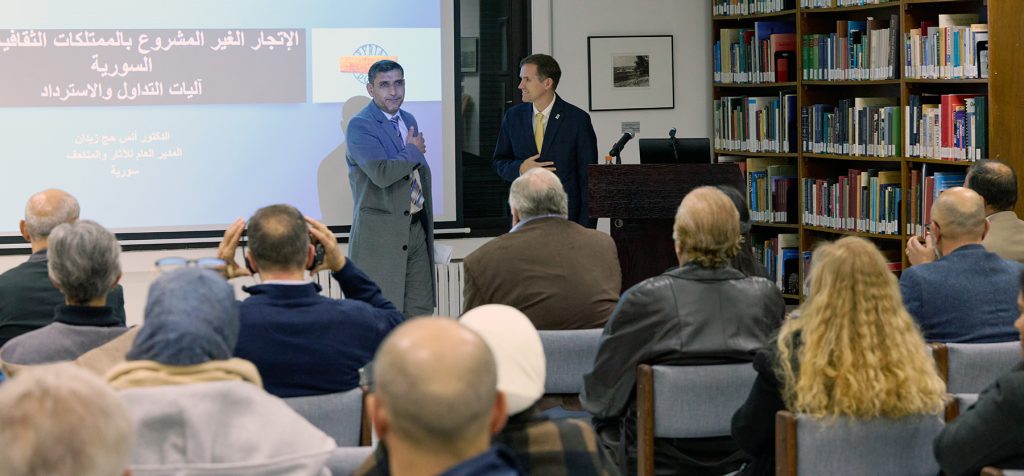
“Illicit Trafficking of Syrian Cultural Properties: Trading Methods and Challenges of Restitution”
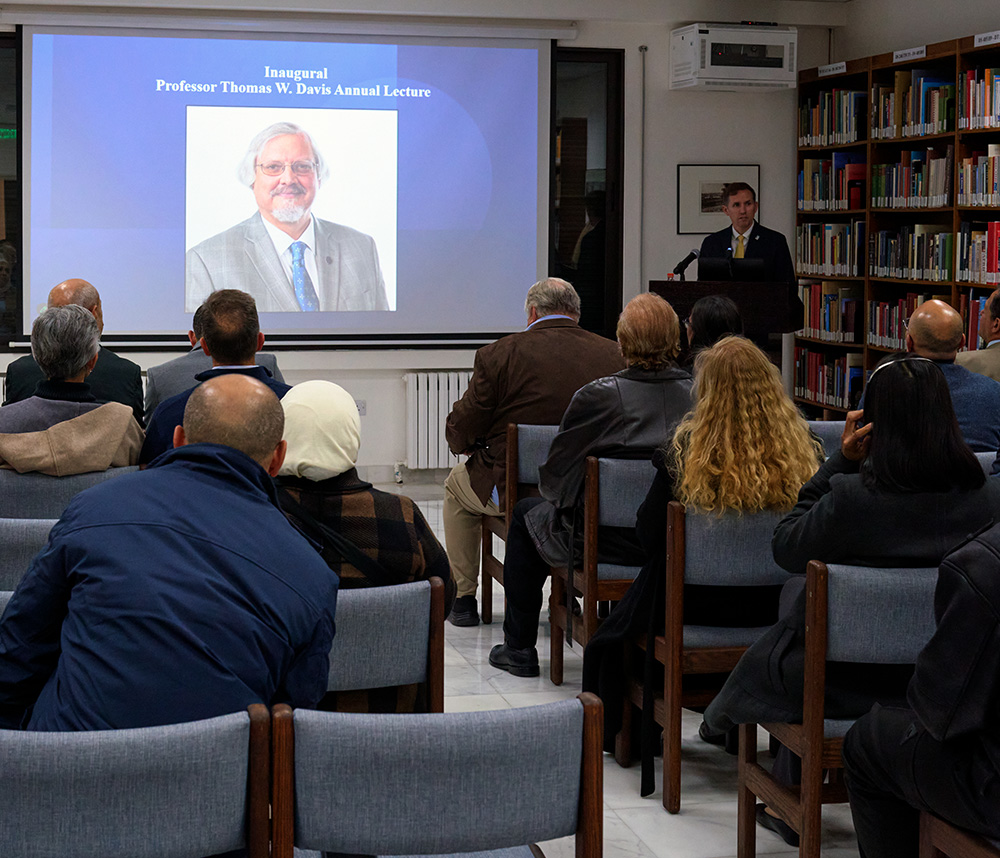
The Inaugural Professor Thomas W. Davis Annual Lecture
Date: December 14, 2025
Time: 6:00 p.m. Amman Time/10 a.m. EST
Place: American Center of Research, Amman, Jordan (click for directions)
ACOR was honored to hold the inaugural Professor Thomas W. Davis Annual Lecture:
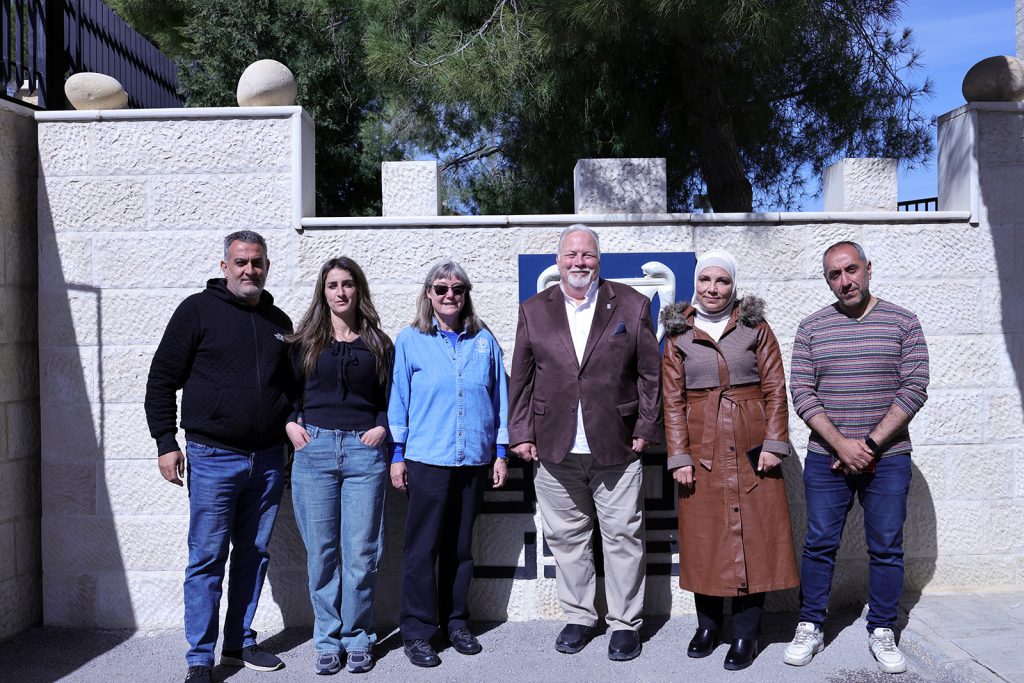
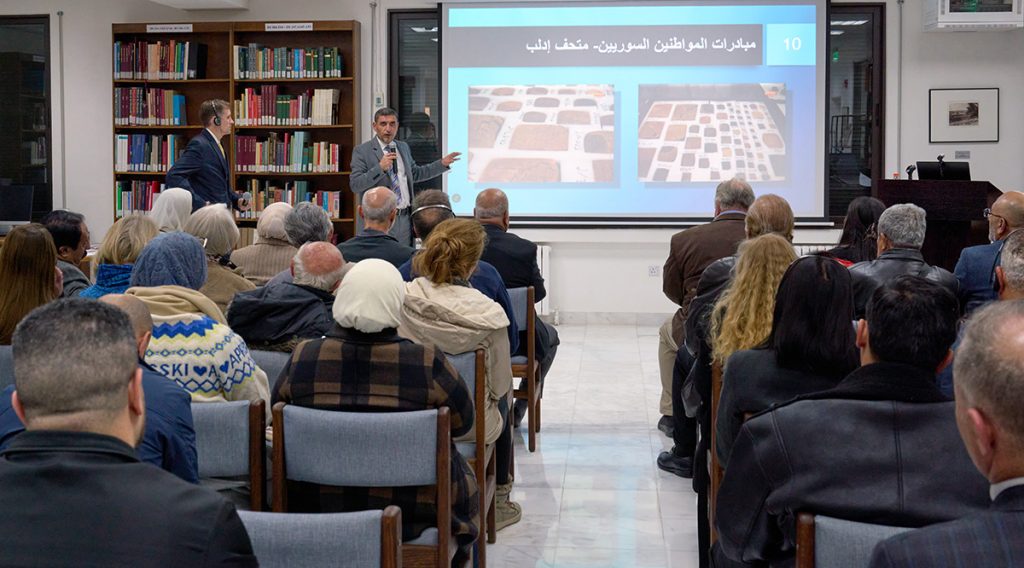
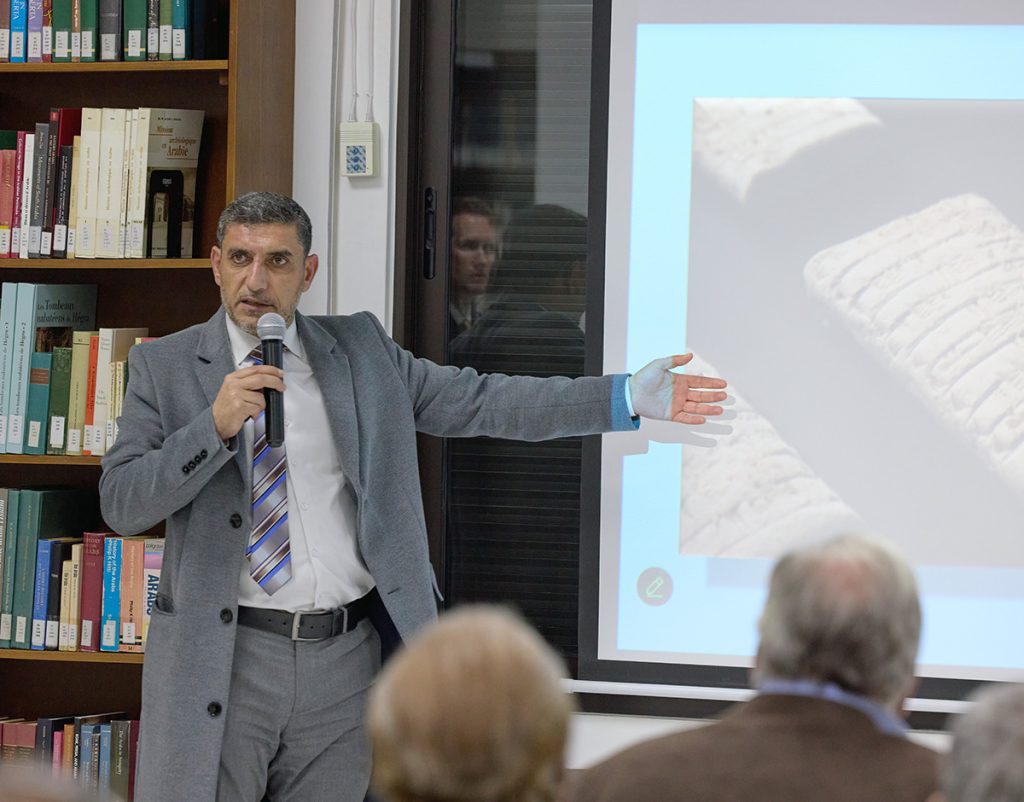
Prof. Dr. Anas Haj Zeidan, director general of the Directorate-General of Antiquities and Museums (DGAM) of the Syrian Arab Republic, presented “Illicit Trafficking of Syrian Cultural Properties: Trading Methods and Challenges of Restitution.” In addition to addressing the role of the DGAM in documentation processes for cultural properties, this lecture covered penalties for trafficking under the current Syrian Antiquities Law, the status of antiquities outside Syria, and the roles of Customs and the Ministry of Interior in the protection of cultural property.
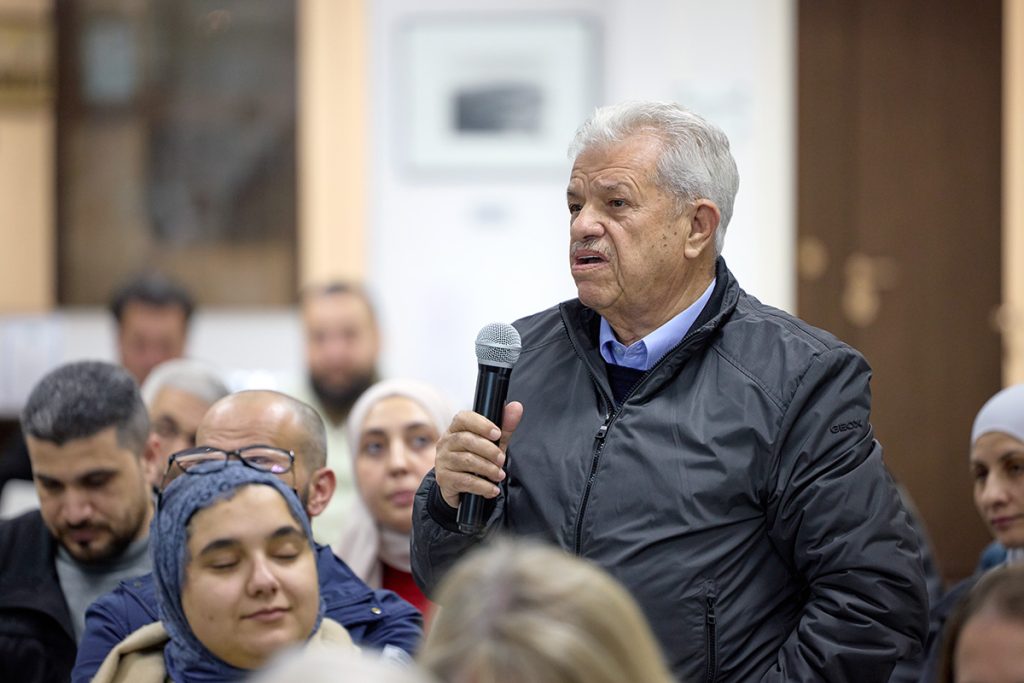
Prof. Dr. Zeidan gave his lecture in Arabic. Live translation into English was available for both in-person and online attendees. The presentation was followed by a Q&A session. Among the attendees who spoke was noted Jordanian archaeologist Prof. Zeidan Kafafi, former president of Yarmouk University, where he is now professor emeritus in archaeology.
Watch the video on our YouTube channel (in Arabic)
About the Speaker
Prof. Dr. Anas Haj Zeidan earned his master’s degree in the conservation of antiquities from the University of Florence and his PhD in Near Eastern archaeology from the Sapienza University of Rome. His research interests, which he presents in academic publications and media appearances, focus on the protection of Syrian cultural heritage, particularly in conflict-affected areas. He lectures at several Syrian universities and has made notable contributions to archaeological missions and scholarly publications related to cultural heritage preservation, as well as to nomination projects of Syrian sites for inclusion in the UNESCO World Heritage List. Formerly the head of the Idlib Antiquities Department, he now serves as director general of the Syrian Arab Republic’s Directorate-General of Antiquities and Museums (DGAM).
About the Professor Thomas W. Davis Annual Lecture
In honor of trustee, scholar, and long-time supporter of ACOR Tom Davis, in 2025 the ACOR Board of Trustees created the “Professor Thomas W. Davis Lecture.” The most prestigious lecture of our annual series, these lectures generally focus on the “interconnections” aspect of ACOR’s mission. Prof. Thomas W. Davis (1956–2025) was a prominent scholar of the eastern Mediterranean and western Asia. Professor Davis served on ACOR’s board of trustees (2020–2025) and as chair of the Publications Committee during our most prolific publishing era. To read more about this lecture series, please visit its webpage.
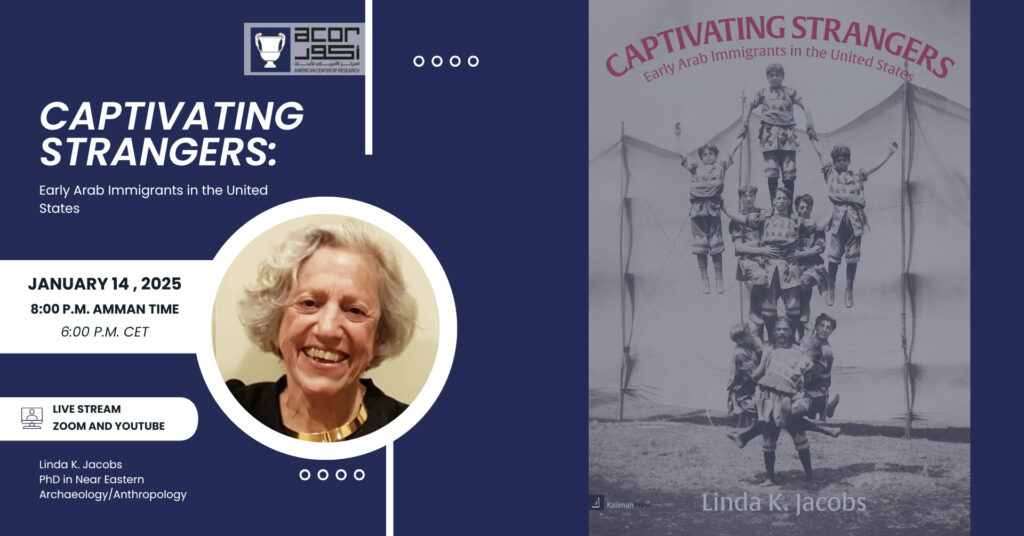
“Captivating Strangers: Early Arab Immigrants in the United States”
by Linda K. Jacobs
Please note that this lecture was online only.
January 14, 2025
8:00 p.m. Amman Time (12:00 noon EST)
Watch the video on our YouTube channel
On January 14, 2025, please join us online for a lecture by Linda K. Jacobs, author of the new book Captivating Strangers: Early Arab Immigrants in the United States. In her latest work, Jacobs explores the untold stories of the first Arab immigrants to the United States. From North African acrobats who performed before the Civil War to western-educated doctors, merchants, and entrepreneurs who spread across the country in the 20th century, the book highlights the incredible variety of careers and contributions these individuals made to American society. Through rich narratives, Captivating Strangers uncovers how these early immigrants navigated challenges, built communities, and left a lasting legacy, shaping the cultural tapestry of the United States.
About the Speaker:
Linda K. Jacobs has a PhD in Near Eastern archaeology/anthropology and spent many years working on excavations and economic development projects in the region. She serves on the board of several regional NGOs. A recognized authority on the early Arab diaspora in the United States, she is the author of Captivating Strangers: Early Arab Immigrants in the United States (2024), Strangers in the West: The Syrian Colony of New York City, 1880–1900 (2015; 2nd Edition, 2023), and Strangers No More: Syrians in the United States, 1880–1900 (2019). An archaeological memoir, Digging In: An American Archaeologist Uncovers the Real Iran, appeared in 2012. All four of her grandparents were members of the 19th-century New York Syrian/Lebanese Colony.
Linda K. Jacobs is not only a passionate historian but also a generous supporter of cultural preservation. She has donated a significant collection of photographs of Syria and Jordan to our digital archive.
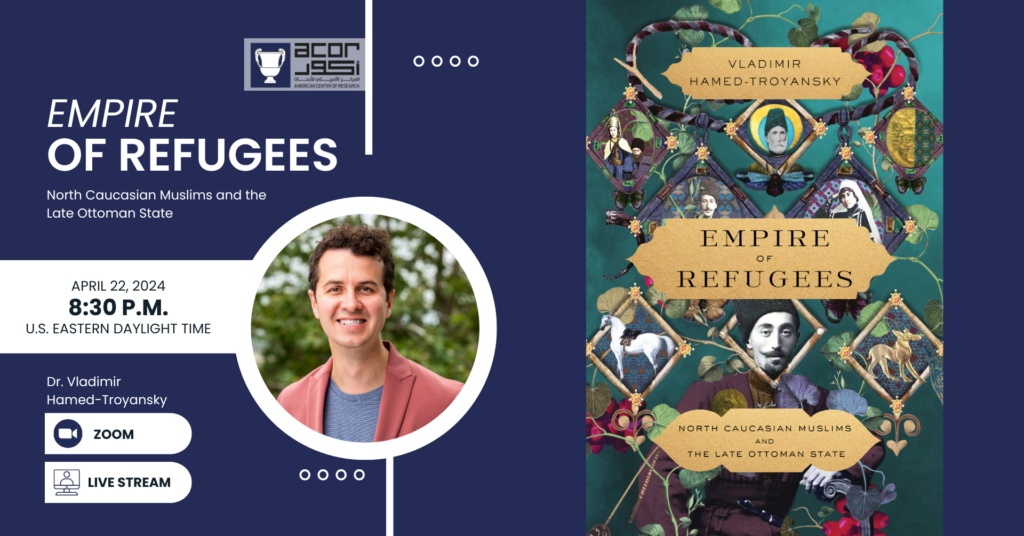
“Empire of Refugees: North Caucasian Muslims and the Late Ottoman State”
by Vladimir Hamed-Troyansky
April 22, 2024
8:30 p.m. U.S. Eastern Time
Watch the video on our YouTube channel
About the Speaker:
Dr. Vladimir Hamed-Troyansky is an historian of global migration and forced displacement and an assistant professor of global studies at the University of California, Santa Barbara. In addition to _Empire of Refugees: North Caucasian Muslims and the Late Ottoman State_ (Stanford University Press, 2024), he has written articles that have appeared in _Past & Present_, _Comparative Studies in Society and History_, _International Journal of Middle East Studies_, _Slavic Review_, and _Kritika_. He received his PhD in history from Stanford University, and during his graduate studies ACOR awarded him a Pierre and Patricia Bikai Fellowship (2013–2014) to examine court records from the Salt and Amman areas for insights into the social and economic life of refugees in Ottoman Transjordan. He has also been a postdoctoral fellow at Columbia University.